
Wood Blinds vs. Faux Wood Blinds
Two blinds can sit side by side on a showroom rack and look nearly identical until you pick them up. One is hardwood, the other is composite, and the difference shows in weight, price, and how each holds up in the room where you hang it. The Painted Horse carries wood and faux wood blinds in our Lexington, Georgetown, and Richmond showrooms, and we’ve created this guide to help you understand the differences and find the best fit for your home.
What Wood Blinds Bring to a Lexington Home
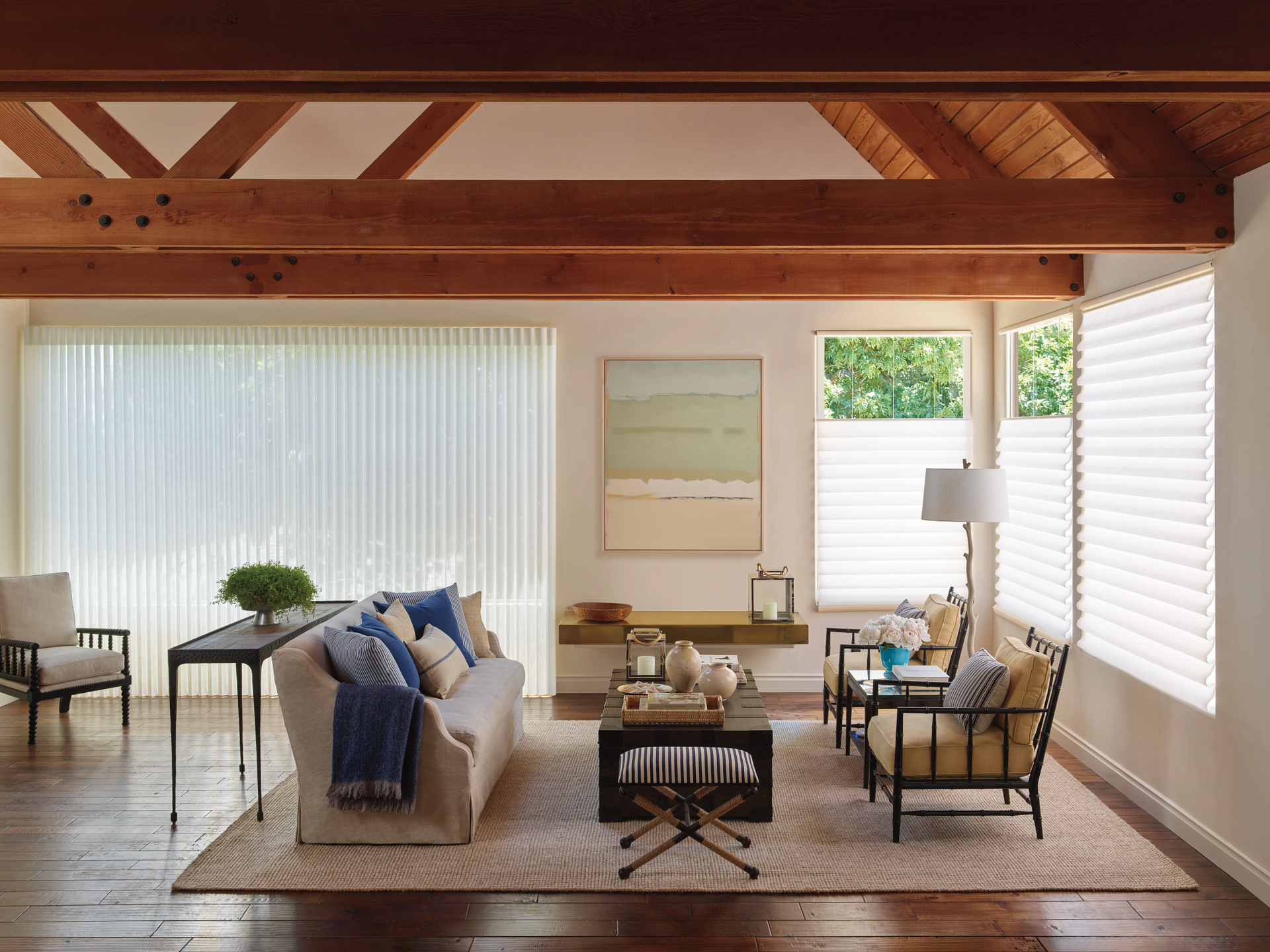
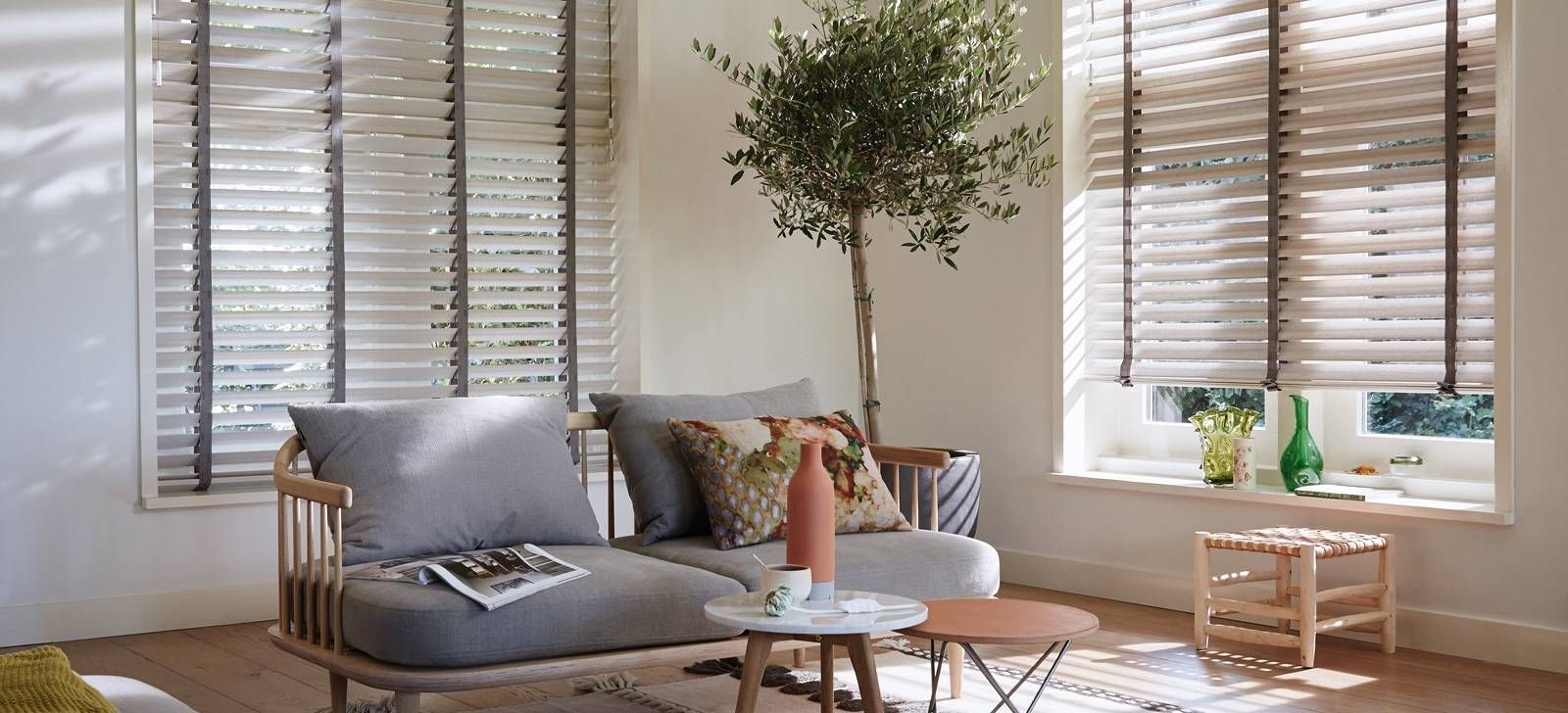
Our hardwood blinds are made from 100% hardwood harvested from renewable farms and forests. These blinds are available in poplar and basswood, and each is durable yet light enough that a wide blind lifts easily. Weight matters on a big window, since a heavy blind puts strain on the lift over years of daily use.
Our hardwood lines include Graber® Traditions® Wood Blinds, Graber® Elite Wood Blinds, and Hunter Douglas Parkland® Wood Blinds. You can customize each line by selecting the stain, slat size, and operating style that best suits your home and décor.
Faux Wood and Composite Blinds for Humid Rooms
Kentucky summers bring steady humidity, and any room that adds moisture puts hardwood at a disadvantage. Bathrooms, kitchens, and laundry rooms cycle through heat and steam daily, and hardwood can eventually warp or bow. Composite and faux wood shrug that off, which is why we steer clients toward them in humid rooms, even when hardwood covers the rest of the house.
Our faux wood and composite options include Graber® Traditions® Composite Blinds, Graber® Lake Forest® Faux Wood Blinds, Norman® Ultimate™ Faux Wood Blinds, Norman® SmartPrivacy® Faux Wood Blinds, and Hunter Douglas EverWood® Faux Wood Blinds.
Composite Blinds for Modern Rooms
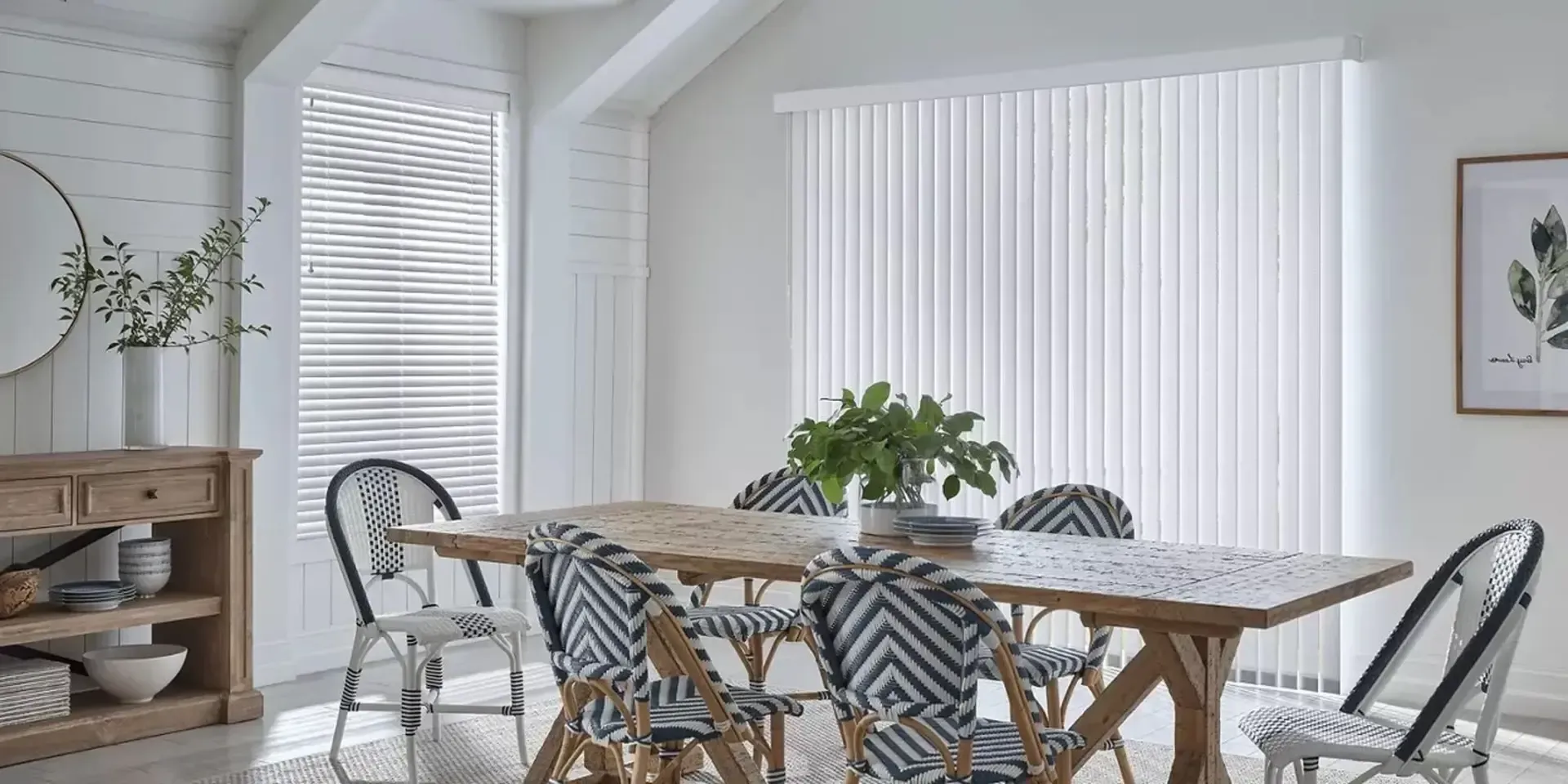
Wood grain suits a traditional room, but many homeowners prefer something cleaner. Our composite blinds come in several neutral whites, giving you a crisp horizontal line against white trim without a wood-grain pattern. The white finish fits well in a newer build or in a room where you want the windows to blend in rather than stand out.
Color consistency comes with the territory. Since composite slats get their color during manufacturing, every slat matches every other one, whereas hardwood arrives with the character that individual craftsmanship produces.
Customizing Your Wood or Faux Wood Blinds
Once you settle on a material, you can get down to the details to get exactly what you want from your window treatments:
- Stain or paint color sets the tone of the room, and hardwood offers a range of natural hues while composite leans toward neutral whites.
- Slat size changes the look, with wider slats giving a bolder line and a clearer view out when open.
- Cord lift and wand tilt remain the classic operations and work across all of our blinds.
- Cordless lift with wand tilt keeps the room safer for pets and small children while giving you a cleaner look at the window.
- Motorization lets you run the blinds with a button, a phone app, or your voice, which helps with high windows and rooms with several openings.
Once you have the material and details narrowed down, seeing the options side by side makes the final call quick and easy.
Wood Blinds and Faux Wood Blinds in Lexington, Kentucky
Seeing wood and faux wood blinds side by side is the fastest way to feel the differences in weight and finish for yourself. Stop by any of our three Central Kentucky showrooms to compare samples in person, and while you're there, pull Benjamin Moore paint chips to test alongside your blind stain or color options.
Call (859) 523-0469 or reach out to us online to book a consultation and find the right blind material for your home. We serve Lexington, Georgetown, Paris, Versailles, and Frankfort, KY.